






If you manage a foodservice operation, there’s a good chance that your kitchen is running with a tight crew, and the constant pressure for everyone to do more with less is a major stressor (for you and your staff).
Unfortunately, when a kitchen is understaffed, it can hurt ticket times, and time-saving efforts could potentially put your customers at risk.
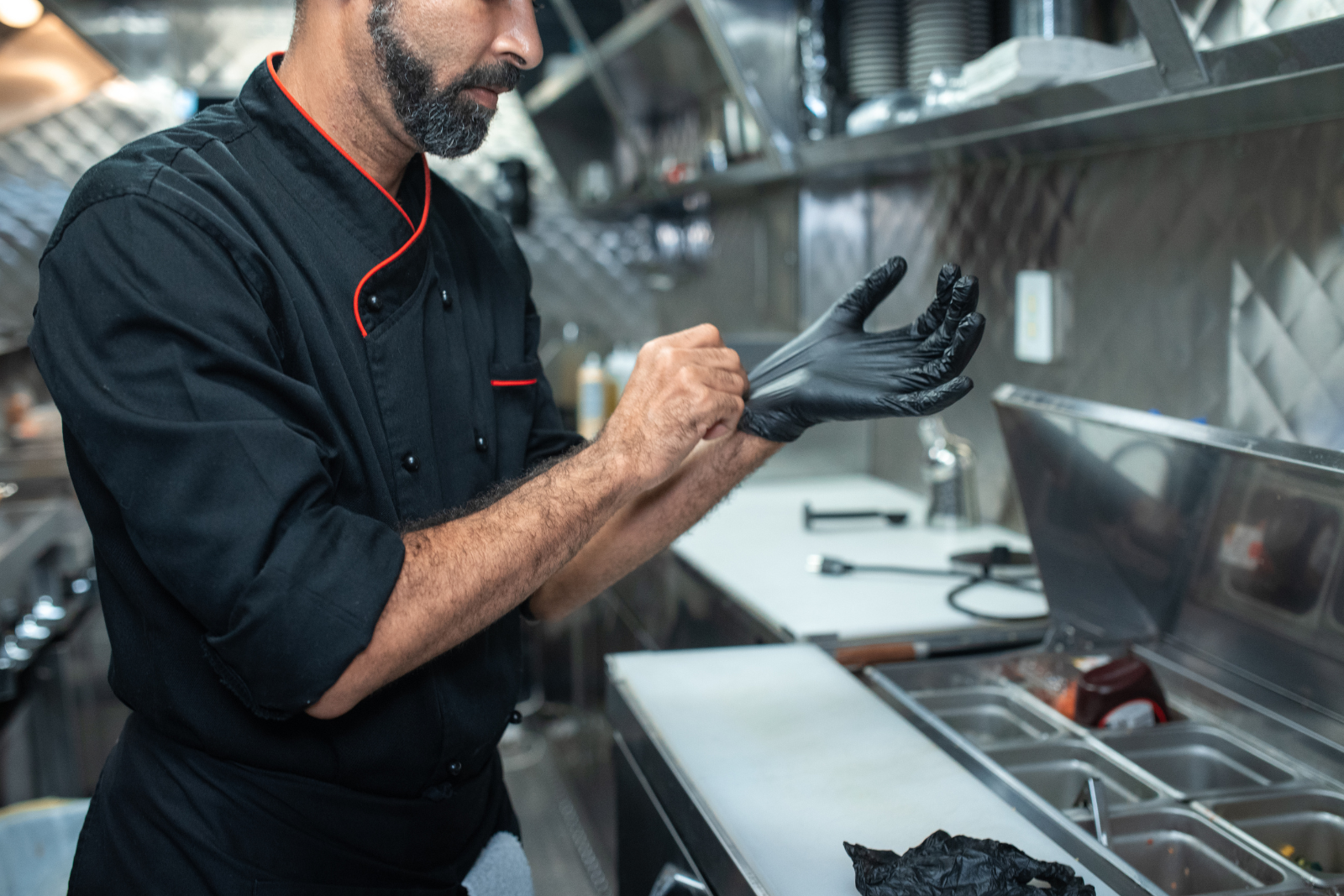
It is rarely intentional, but when a line cook is doing the job of two people, they might forget to change their gloves between tasks or check every dish’s temperature.
There’s a direct link between the current workforce shortage and the challenge of ensuring a secure food system, as understaffing dramatically increases the likelihood of foodborne illnesses.1 When you’re scrambling to fill shifts, food safety culture is often the first thing to slip.
This is one reason why seasonal workers are so valuable. They’re the cavalry, arriving just when you need them most. Whether it’s for the summer rush or the holiday madness, these temporary team members are the only reason some operations stay afloat during peak times. In fact, in the summer of 2025 alone, restaurants added around 490,000 seasonal jobs to handle the influx of diners.2
Bringing on a wave of temporary staff creates a unique challenge. You need your seasonal staff to support your business, and you also need them to be responsible and follow food safety best practices.
How do you get them up to speed on strict safety protocols when they might only be with you for three months? You can’t afford to skip training, but you also can’t afford to spend six weeks onboarding someone who leaves in twelve.
Read on to learn how to find that balance and protect your customers:
How to train seasonal staff on food safety
Have a structured training plan in place
Hold mandatory pre-holiday meetings
Train all new employees and offer regular refreshers
Be mindful of food safety for specialty items
Make training role-specific, but don’t be exclusionary
Set clear performance expectations and schedule intervals for feedback
Treat seasonal workers the same as full-time staff
How to train seasonal staff on food safety
There’s no cookie-cutter formula that will work across the board for training every single team, but by keeping the following principles and themes in mind, you can fashion a system that works well for yours:
Focus on key best practices
You have to be realistic about what a human being can retain in a short amount of time. If you try to teach a summer hire the entire history of your culinary philosophy alongside complex safety codes, they’re going to zone out.
Instead, decide what is absolutely non-negotiable for your specific operation. These are the practices that, if ignored, could shut down your business or make someone sick.
- FIFO (First In, First Out): Make sure they understand that the new milk goes behind the old milk. It sounds simple, but to a teenager in their first job, it’s not intuitive.
- Temperature Control: Show them exactly how to use the thermometer and tell them the specific danger zones for the foods they handle.
- Handwashing: Don’t just assume they know how to wash their hands. Watch them do it. Show them where staff should wash their hands and watch them practice.
- Allergen Awareness: If you have a peanut- or shellfish-heavy menu, this is one you might want to move to the top of the list.
Of course, there are countless other topics you should consider adding to your list, but this is a good start. Sit down, grab a piece of paper, and brainstorm. What’s the most critical information to communicate, right now?
Have a structured training plan in place
As a foodservice professional, you have to be good at thinking on your feet. But winging it is a recipe for disaster when it comes to food safety training.
You might think you can just have the new hire follow your star server around for a shift and they’ll pick it up, but that server might be having a bad day (or have some bad habits you don’t know about!).
You need a structured plan that covers the most essential best practices for your business.
A simple checklist or one-page roadmap can work wonders by ensuring consistency. Every single seasonal hire gets the exact same information, delivered in the same way. This protects you legally, but more importantly, it standardizes the behavior in your kitchen. When everyone is working from the same playbook, it’s easier to spot when someone goes off-script.
Hold mandatory pre-holiday meetings
Before the chaos of the holiday season or the summer kick-off, get everyone in the same room. Make it mandatory for everyone–even for the staff who have been with you for years.
This is your opportunity to set the tone. Use this time to explain why food safety matters so much during busy periods. Explain that when the restaurant is packed, the risk of cross-contamination goes up because everyone is moving faster.
Use this meeting to introduce your seasonal staff to the rest of the team and to establish a culture in which safety is a shared responsibility. If you treat food safety as a team sport, your seasonal staff will feel more compelled to play by the rules.
Train all new employees and offer regular refreshers
There’s a dangerous assumption about seasonal staff returning for their second or third year. You see a familiar face and think, "Oh, Sarah knows the drill; she worked here last summer."
Don’t fall into this trap! Sarah might have forgotten everything she learned last August. Or maybe your protocols have changed since then. Maybe the health code changed.
You must train everyone on your team, even the returning ones. Treat them as if they are brand new to the concept because seasonal staff who only pop in for a few weeks at a time can easily be left out of the loop because they aren't technically "new," but they are the ones most likely to be rusty.
Offer regular refresher training and coaching to everyone. A quick five-minute reminder about cooling procedures during a pre-shift lineup can save you a world of trouble later.
Consider using “mini” modules
There’s a good chance you’re hiring younger workers for these seasonal roles, or people who are picking up this job as a second gig. Their time and attention spans are limited, and long, lecture-style training sessions are rarely effective.
The solution is to lean into microlearning. Break your food safety training down into bite-sized chunks. Think about five-minute video clips or quick digital quizzes they can do on their phone.
- Show a three-minute video on proper glove use.
- Do a two-minute demonstration on sanitizing surfaces.
- Send a quick infographic about cross-contamination to the team group chat.
This approach respects their time and makes the information more digestible, since it’s easier to remember one safety concept learned thoroughly in five minutes than twenty concepts skimmed over in an hour.
Create a prep schedule
Chaos is the absolute enemy of food safety. When seasonal staff are overwhelmed, they panic.
You can mitigate panic by creating a rock-solid prep schedule. Take the guesswork out of their day. If your seasonal staff know exactly what needs to be prepped and when, they aren't rushing and can focus on doing it safely.
A good schedule builds in time for proper cooling, labeling, and cleaning, and most importantly, it creates a rhythm that supports safety rather than fighting against it.
Be mindful of food safety for specialty items
Seasonal menus are great for revenue, but they can be a nightmare for safety if you aren't careful. That pumpkin spice latte with the homemade whip or the raw oyster bar you open for the summer patio requires some specific knowledge.
If a staff member has never handled raw shellfish before, you cannot expect them to know the risks of Vibrio vulnificus.3 If they’ve never made eggnog from scratch, they may not know about the Salmonella risk of raw eggs. Identify the items on your menu that are unique to the season and build specific training around them. Don’t assume general food safety knowledge covers these niche items.
Make training role-specific, but don’t be exclusionary
Cross-training is a wonderful thing. In a perfect world, your dishwasher could jump on the line, and your server could pour drinks. But when you have a seasonal worker who will only be there for eight weeks, you need to be practical.
Make the training role-specific, focusing intensely on the immediate role in question. If you hire a runner, drill them on preventing cross-contamination during food transport and proper handling of glasses and dishware. They don't need to master the intricate details of deep fryer maintenance in their first week.
At the same time, be careful not to be exclusionary. You still want them to understand how their role fits into the bigger picture. Explain that while they may not be the ones who cook the chicken, their job of promptly bringing it to the table is still key to maintaining safe food temperatures.
Lean into shadowing
Theory is great, but practice is better. The most effective way to train a seasonal worker is to velcro them to your best workers.
Pair your seasonal hire with a veteran staff member who exemplifies food safety. Let them watch how the veteran handles a rush without compromising standards.
Obviously, it is essential that you choose the right mentor. Don’t just pick the person with the most seniority; pick the person with the best habits. If your seasonal staff sees their mentor cutting corners, they’ll cut corners too.
Set clear performance expectations and schedule intervals for feedback
You can’t correct what you don’t catch. From the very first shift, set clear expectations regarding food safety. Tell them explicitly: "We take this seriously, and here is how we measure it."
Then, schedule intervals for feedback. Don't wait for the end of the season. Check in after week one. Check in after month one.
- "I noticed you changed your gloves after bussing that table. Great job."
- "I saw you forgot to date the prep container. Let’s fix that now."
Regular feedback normalizes the conversation around safety, meaning it stops being a scary disciplinary thing and starts being just part of the job.
Treat seasonal workers the same as full-time staff
If you treat your seasonal workers as disposable, they’ll act like it. If they feel like "just temps," they won't feel a sense of ownership over the business's reputation.
Therefore, you need to treat your seasonal staff with the same respect and hold them to the same high standards as your full-time staff. Include them in the family meal, invite them to the staff outing, and give them a uniform that fits. When they feel included, it will build psychological buy-in, which is often the difference between someone who ignores a safety hazard and one who fixes it.
There’s no question that training seasonal staff takes time, energy, and patience. But the alternative–a foodborne illness outbreak during your busiest season–is infinitely worse. Invest in your workers, and you’ll invest in both your customers' health and your business's longevity.
Need help building a training program that sticks? Trust20 offers accessible, accredited food safety training products that fit the way the modern industry works.
If you prioritize food safety training today, you are setting your team up for success tomorrow!
Sources:
2. Restaurants projected to add 490k seasonal jobs this summer: National Restaurant Association
3. About Vibrio Infection - Centers for Disease Control and Prevention